
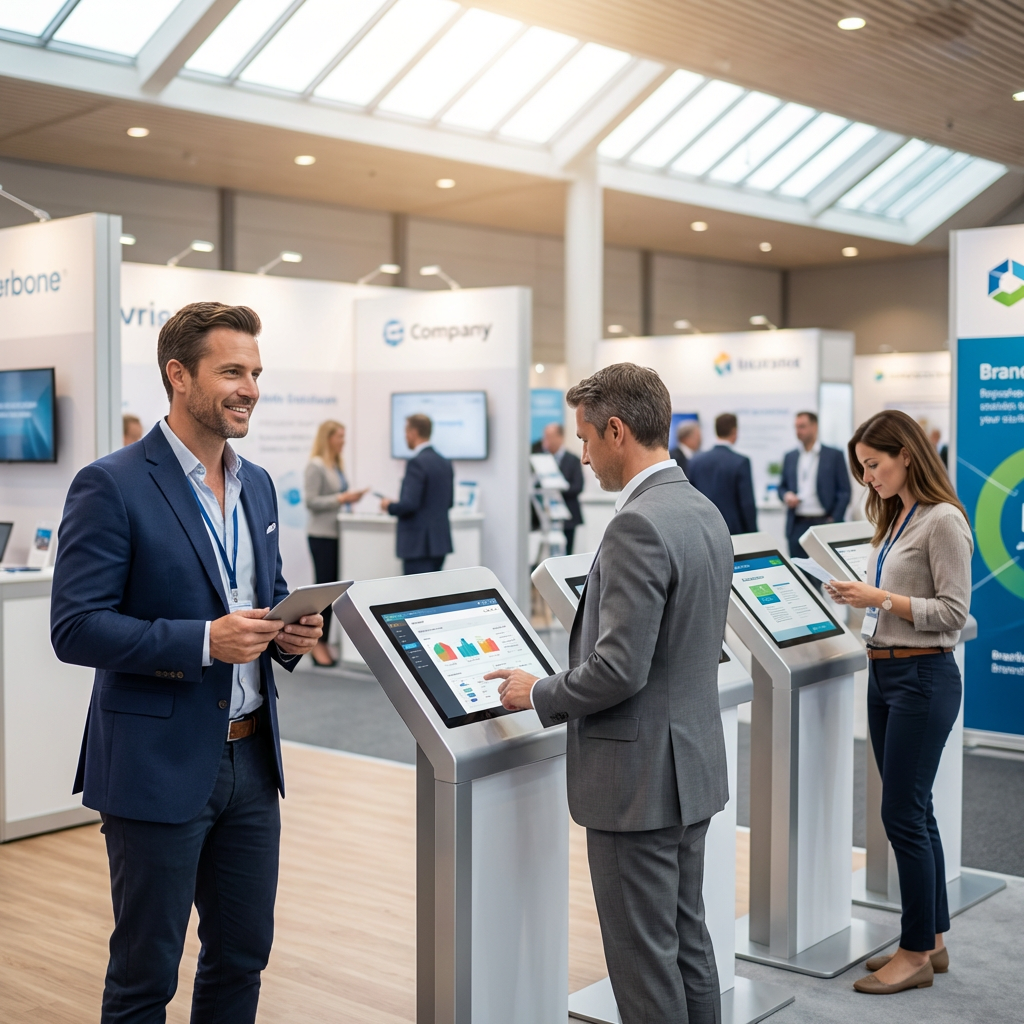
You’re three weeks out from your biggest trade show of the year. Your booth design is locked. Your team is prepped. Then someone asks: “Do we own those kiosks, or are we renting?” If you hesitated, you’re not alone.
Most event managers face this question at least once. And the answer isn’t always obvious—especially when you’re juggling budgets, timelines, and the very real fear that something will break in front of 10,000 people.
Here’s what we’ve learned after 30+ years of deploying interactive kiosks for trade shows, conferences, and corporate events across Canada: the companies that rent don’t just save money. They sleep better.
The Real Cost of Owning Interactive Kiosks
Let’s start with the obvious: buying kiosks feels like control. You own them. They’re yours. No one can take them away. But here’s what ownership actually looks like: Upfront capital: $3,000–$8,000 per kiosk (and you’ll need at least 3–5 for a decent booth presence). Storage: Where do they live between events? Your office? A warehouse? That’s rent, climate control, and insurance. Maintenance: Screens crack. Software updates break things. Touchscreens stop responding. Someone has to fix that. Obsolescence: In 18 months, your kiosks look dated. In 3 years, they’re a liability. Transport: You’re now responsible for packing, shipping, and setup. Every. Single. Time.
And the kicker? You still don’t have a backup plan if something fails on-site. Ownership gives you an asset. But it also gives you a second full-time job.
Why Renting Isn’t “Just for Budgets”
Most people think renting is about saving money. And yes, it does that. But the real reason event managers rent isn’t financial—it’s operational.
You Get the Right Tech for the Right Event
Not every event needs the same kiosk. A product launch at a convention center has different needs than a recruitment fair at a university. When you rent, you can spec exactly what you need: 32″ touchscreens for high-traffic booths, compact tablets for intimate settings, branded enclosures that match your booth design, and custom software integrations (CRM, lead capture, gamification). You’re not locked into hardware you bought three years ago. You’re deploying what works now.
Someone Else Owns the Risk
Here’s a scenario every event manager dreads: It’s 7 a.m. on Day 1 of your trade show. You’re setting up. One of your kiosks won’t turn on. The screen is black. Your IT person is 400 km away.
If you own the kiosk: You’re scrambling. Calling techs. Googling error codes. Praying. If you rent from Vernon: You text us. We swap it out. You’re live in 20 minutes.
That’s not hyperbole. That’s the contract. When you rent, the vendor owns the risk. If something breaks, it’s their problem to solve—not yours. And if you’ve ever had to explain to your VP why the booth isn’t ready at 9 a.m., you know exactly what that peace of mind is worth.
You Don’t Pay for Downtime
Let’s say you run 4 trade shows a year. That’s 12 days of actual use. If you own your kiosks, you’re paying for 365 days of storage, insurance, and depreciation—for 12 days of value. When you rent, you pay for what you use. No storage fees. No maintenance contracts. No “Oh crap, we need to update the software before the next event.” You show up. The kiosks work. You leave. Done.
You Stay Current Without Trying
Technology moves fast. What looked cutting-edge in 2022 looks clunky in 2024. When you own kiosks, you’re stuck with them until you can justify another capital expense. When you rent, you get access to the latest hardware and software every time you deploy.
That means: faster processors, brighter and more responsive screens, better integrations with your CRM and marketing tools, and cleaner, more modern designs that don’t scream “2019”. Your booth stays fresh. Your brand stays relevant. And you didn’t have to fight finance for a new PO.
When Buying Makes Sense (Spoiler: It’s Rare)
Look, we’re not going to tell you that renting is always the answer. There are cases where buying makes sense: You run 20+ events a year with the exact same setup every time. You have in-house IT support who can maintain, troubleshoot, and transport the kiosks. You have dedicated storage space that isn’t costing you rent or climate control. You’re okay with tech that’s “good enough” for the next 3–5 years.
If all four of those are true, buying might pencil out. But for most event managers—especially those running 2–10 events a year—renting is faster, cheaper, and way less stressful.
What to Look for in a Kiosk Rental Partner
Not all rental companies are created equal. Here’s what separates the pros from the “we also rent projectors” crowd: On-Site Support – If something breaks, can they fix it in minutes—not hours? Do they have techs on standby, or are you filing a ticket? Custom Configurations – Can they load your software, integrate with your CRM, and brand the interface? Or are you getting a generic kiosk with a sticker? Transparent Pricing – Are you getting a flat rate, or are there hidden fees for delivery, setup, and “emergency support”? Backup Units – Do they bring spares to every event? Because if they don’t, you’re still at risk. Experience in Your Industry – Have they done trade shows, conferences, and corporate events—or are they winging it?
At Vernon, we’ve been doing this since 1991. We’ve seen every failure mode, every last-minute panic, and every “can you fix this in 10 minutes?” scenario. And we’ve built our service around making sure you never have to worry about the tech.
The Bottom Line
Buying interactive kiosks feels like control. But in reality, it’s a commitment to maintenance, storage, obsolescence, and risk. Renting gives you flexibility, support, and the confidence that if something goes wrong, it’s not your problem to solve at 7 a.m. on show day.
Smart event managers don’t rent because they can’t afford to buy. They rent because they can’t afford not to.
If you’re planning a trade show, conference, or corporate event in Canada and you want interactive kiosks that just work—no drama, no downtime, no surprises—let’s talk. We’ve been doing this for 30+ years. We know what works. And we’ll make sure your event does too.
